
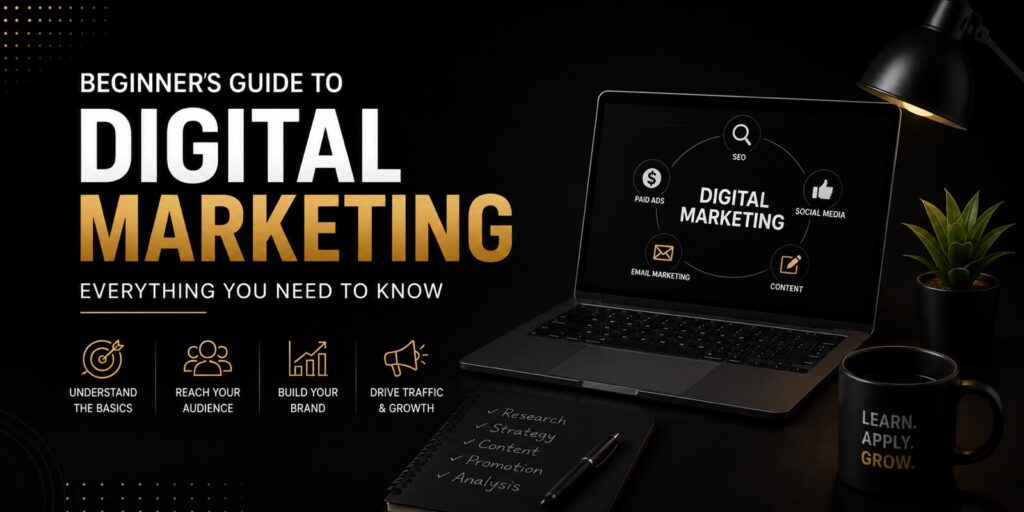
In today’s digital-first world, having an online presence is no longer optional—it’s essential. Whether you’re a business owner, student, freelancer, or aspiring marketer, understanding digital marketing can help you connect with your audience, build your brand, and achieve your goals. This beginner’s guide covers the fundamentals of digital marketing and explains why it has become one of the most valuable skills in today’s competitive market.
What Is Digital Marketing?
Digital marketing is the practice of promoting products, services, or brands using digital channels such as search engines, websites, social media platforms, email, and mobile applications. Unlike traditional marketing, digital marketing allows businesses to reach the right audience, measure campaign performance, and optimize strategies based on real-time data.
Why Is Digital Marketing Important?
Consumers spend a significant amount of time online, making digital platforms the ideal place for businesses to connect with potential customers. Digital marketing offers several advantages:
- Cost-effective compared to traditional advertising
- Reaches a global audience
- Enables precise audience targeting
- Delivers measurable results through analytics
- Builds long-term customer relationships
- Increases brand awareness and online visibility
Key Components of Digital Marketing
- Search Engine Optimization (SEO)
SEO helps your website rank higher on search engines like Google. By optimizing your website’s content, keywords, speed, and user experience, you can attract more organic traffic without paying for ads.
- Content Marketing
Content marketing focuses on creating valuable and informative content such as blogs, videos, infographics, and guides. High-quality content helps educate your audience, build trust, and improve your search engine rankings.
- Social Media Marketing
Platforms like Facebook, Instagram, LinkedIn, and X allow businesses to engage directly with their audience. Social media marketing helps increase brand awareness, drive website traffic, and build customer loyalty.
- Email Marketing
Email marketing remains one of the most effective digital marketing channels. Personalized newsletters, promotional emails, and automated campaigns help businesses maintain strong relationships with customers and encourage repeat purchases.
- Pay-Per-Click (PPC) Advertising
PPC advertising enables businesses to display paid advertisements on search engines and social media platforms. Advertisers only pay when someone clicks on their ad, making it an efficient way to generate targeted traffic.
- Analytics and Performance Tracking
Digital marketing allows businesses to measure campaign performance using tools such as Google Analytics. Monitoring website traffic, conversions, and customer behavior helps marketers make data-driven decisions.
How to Get Started with Digital Marketing
If you’re new to digital marketing, follow these simple steps:
- Learn the fundamentals of SEO and content marketing.
- Create a professional website or blog.
- Build a presence on relevant social media platforms.
- Publish valuable content consistently.
- Learn basic analytics to track performance.
- Experiment with small advertising campaigns.
- Continue learning as digital marketing trends evolve.